
Cleaning a government facility is not the same job as cleaning an office. City halls, county buildings, courts, libraries, senior centers, and public-works facilities serve the public all day, answer to taxpayers, and operate under procurement rules that most cleaning companies have never dealt with. If you’re the facility manager, administrator, or procurement officer responsible for hiring a cleaning contractor, here’s a practical checklist of what to require — and the questions that separate qualified vendors from the rest.
Why Government Facilities Are a Different Cleaning Job
Three things change the work. First, traffic: a public counter sees more daily visitors than most private offices see in a week, which means restrooms, lobbies, and high-touch surfaces need commercial-grade attention on a tight cadence. Second, accountability: work happens in buildings that hold sensitive records, evidence, or IT infrastructure, so who is in the building — and when — matters as much as how well they clean. Third, procurement: public money means documented scopes, verifiable insurance, and often formal bids. A contractor who can’t produce paperwork quickly will slow your process down.
The 9 Requirements Worth Putting in Your RFP
1. Background-checked, consistent staff
Require named, background-checked personnel — not a rotating cast. Consistency is a security feature: the same two or three cleaners learn the building, and badge access stays auditable.
2. Proof of insurance at government-appropriate limits
General liability and workers’ compensation certificates should arrive before the first visit, with your entity named as certificate holder. This is a five-minute ask for a legitimate company.
3. A written, per-visit scope of work
Every janitorial dispute traces back to a vague scope. Require a task list broken down by frequency: what happens every visit, weekly, monthly, quarterly. It becomes your inspection checklist and their accountability document.
4. Disinfection protocols, not just “cleaning”
Public counters, restroom fixtures, door hardware, and shared equipment need actual disinfection with EPA-registered products used at correct dwell times — not a spray-and-immediate-wipe. Ask which products, on which surfaces, at what frequency. A company that can answer precisely, like Queen B Cleaning & Disinfecting, has done this work before.
5. After-hours capability with documented access control
Most government cleaning happens after close. Require a written key/badge protocol: who holds access, how it’s logged, and what happens when staff changes.
6. Floor-care competency
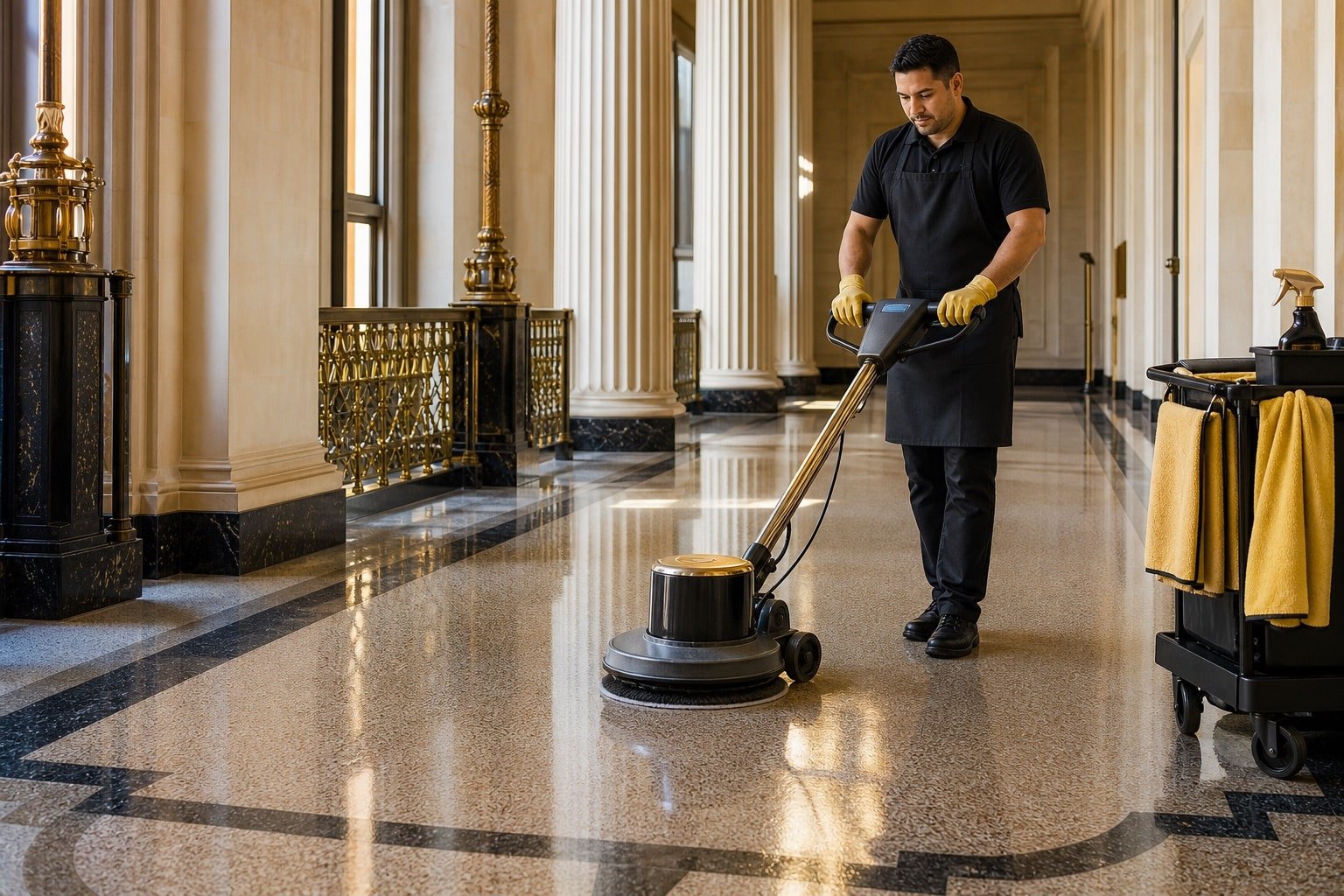
Government buildings run hard flooring — terrazzo, VCT, polished concrete — that needs periodic machine work, not just mopping. Cache Valley winters add road salt and grit from November through March; entrance matting and stepped-up floor care in those months protect surfaces taxpayers paid for.
7. Supply and consumables accounting
Decide up front who supplies liners, paper, and soap, and how usage is reported. Line-item transparency simplifies your budget review.
8. An inspection and remediation process
Agree on how deficiencies get reported and how fast they get fixed — a 24-hour re-clean commitment is a reasonable standard. Quarterly walk-throughs with a sign-off sheet keep both sides honest.
9. Local responsiveness
When a pipe leaks in the records room at 6 a.m., a contractor based in Cache Valley can be there before the doors open. Distant franchises dispatch when they can. Ask where the crew actually lives and what their emergency response time is.
Common Facility Types We See in Northern Utah
- Municipal offices and city halls — lobby and counter focus, records-area access control
- Libraries and community centers — high public traffic, restrooms, and event turnover
- Public safety and justice buildings — strict access protocols and scheduling around operations
- Senior and community services centers — heightened disinfection standards for vulnerable populations
- Public works and shop facilities — office/restroom janitorial plus industrial-tolerant floor care
Budgeting: What Should a Public Entity Expect to Pay?
Janitorial pricing for public buildings in northern Utah generally follows commercial rates — commonly $0.08–$0.20 per square foot per visit depending on frequency, restroom density, and floor types, with periodic floor-machine work quoted separately. The cheapest bid is rarely the cheapest contract: underpriced vendors cut visit time, and the deficiencies show up in public restrooms first — exactly where residents notice. Score bids on scope completeness and verifiable references, not price alone.
Frequently Asked Questions
Do cleaning contractors for government buildings need special certifications?
Requirements vary by entity and building. At minimum, expect verifiable insurance, background-checked staff, and documented disinfection practices. Some federal and courthouse settings add their own vetting on top — build time for it into your procurement schedule.
Can a small local company handle a government contract?
Often better than a national franchise, provided insurance, staffing consistency, and paperwork are in order. Local companies answer the phone, know the building, and depend on their reputation in the community they clean for.
How should we structure the contract term?
Annual terms with a 30-day termination clause and a defined scope revision process are standard. That protects the entity while giving the vendor enough runway to staff properly.
What about cleaning during business hours?
A hybrid model works well for public buildings: after-hours full service, plus a day porter for restroom checks and lobby upkeep in high-traffic facilities.
Talk to a Local Contractor Who Speaks This Language
Queen B Cleaning & Disinfecting provides government facility cleaning throughout Cache Valley, with background-checked staff, written scopes, and documented disinfection protocols — based right here in the valley, serving Logan, Hyrum, and surrounding communities. Call (435) 799-1534 or request a facility walkthrough — we’ll provide a written scope and quote your procurement office can actually work with.